
Eating at a restaurant is not just about the food; it is the whole dine-in experience that matters. This is why eateries are putting their best efforts into attracting their target customers on social media. Of course, they need to be exceptionally innovative and bring out-of-the-box ideas for designing their social media strategies. So, if you own or manage a restaurant or cafe, let’s dive into 5 amazing social media strategies for restaurants.
Pickle Barrel, a well-known restaurant chain, was established in 1971 in Toronto. It became a sensation on Instagram due to its various social media campaigns and giveaways. On its 50th anniversary, the brand announced many giveaways, the key highlight being the free annual Pickle Barrel. If the Pickle Barrel had stuck with its retro marketing strategies, it wouldn’t have reached these heights today. This example illustrates the significance of social media strategies on the success of modern-day food businesses.
Key Takeaways
- Using social media strategies for marketing is the best way of creating online brand awareness and fostering greater customer engagement for food businesses.
- Restaurants that have a strong social media presence can reach a broader target audience at a lower cost than offline marketing campaigns. Also, it can build a community of loyal customers and help these eateries attract more potential customers.
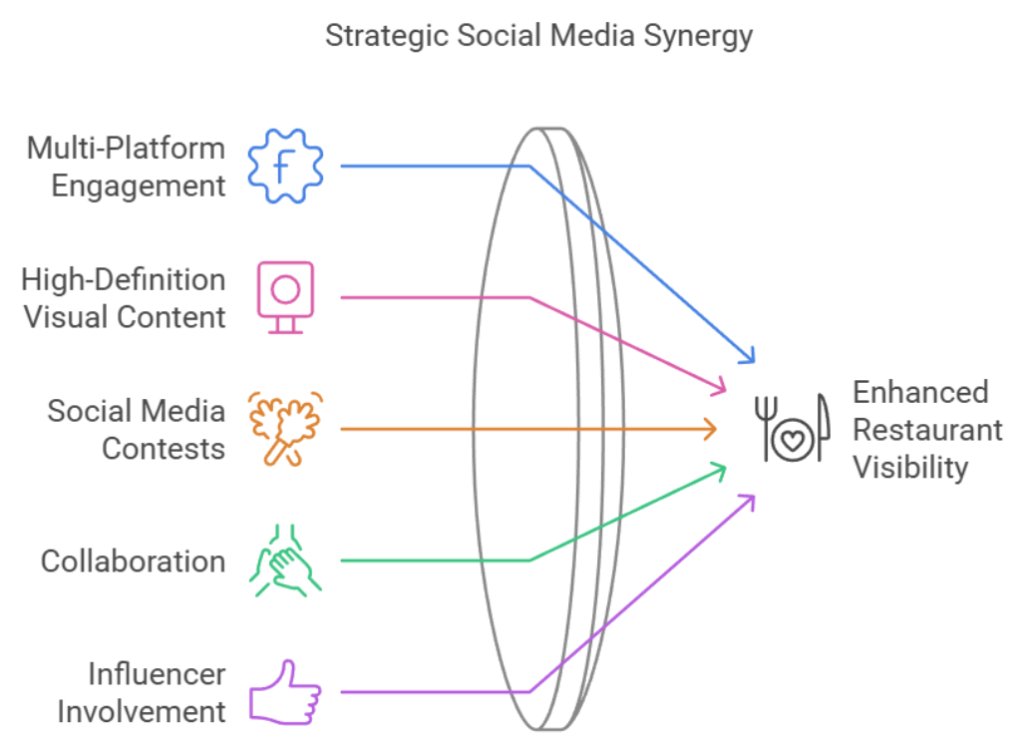
- The 5 exceptional social media strategies for restaurants include multi-platform engagement, high-definition visual content, social media contests, brand collaboration, and partnership with social media influencers and food bloggers.
Why is Social Media Engagement Important for Restaurants?
In an era when people browse the reviews of a newly opened restaurant in the city before dining there, social media presence and marketing open up broad opportunities for eateries.
If you plan a moonlight dinner for your wife on your first month anniversary, you will first find a popular place that takes such bookings. The next step would probably be going through the social media reviews of other guests to learn about their experiences.
Let us discover the various reasons why social media strategies for restaurant marketing is essential:
- Brand Awareness: A small restaurant can grow into an iconic brand with a strong social media presence fostering customer feedback, reviews, and constant brand interaction.
- Customer Engagement: It is the best way to connect with the target audience since most individuals are active and more responsive on social media compared to anywhere else. Also, eateries can adopt different methods to seek their attention like online contests, challenges, and events.
- Increased Footfall: With the right strategies in place, restaurants can become popular in their local area. Thus, it means more customers and bookings for the restaurant.
- Community Building: When food businesses create a strong online brand image, their happy and loyal customers openly express their experiences and expectations, forming a community.
- Broader Reach: Offline marketing has a limited approach targeting only the potential customers of a particular area. SMM provides an opportunity for restaurants to promote their offerings to a broader target audience.
- Customer Feedback and Communication: Customers get a platform to share their reviews, experiences, complaints, suggestions, etc. about eateries. Also, the restaurants can respond to customer feedback to ensure two-way communication and establish a strong customer relationship.
- Lower Marketing Cost: Social media campaigns are more feasible than offline marketing costs in terms of conversion rates.
Restaurant’s Social Media Marketing
Restaurants are becoming unimaginably creative when it comes to deciding their social media strategies for robust online presence. While it has opened up the doors of opportunities for many small food businesses, it has also increased competition levels in the industry. Therefore, if you own a restaurant, you must strategically plan your social media moves for greater visibility and reach.
Now, the question is which online platforms are suitable for a restaurant’s social media promotion. The most effective platforms for restaurant marketing include Facebook, Instagram, and TikTok. Indeed, Pinterest has served as a milestone in the success of many big restaurant brands like KFC.
Also, eateries can undertake YouTube marketing strategies to represent their food, customer experiences, hospitality and ambience to a broader audience. Further, the other social media marketing strategy is to post the success stories on LinkedIn and X (formerly Twitter). It facilitates professional collaboration and interaction.
Given below are some tips and tricks you should consider while taking your restaurant business to the target audience on social media:
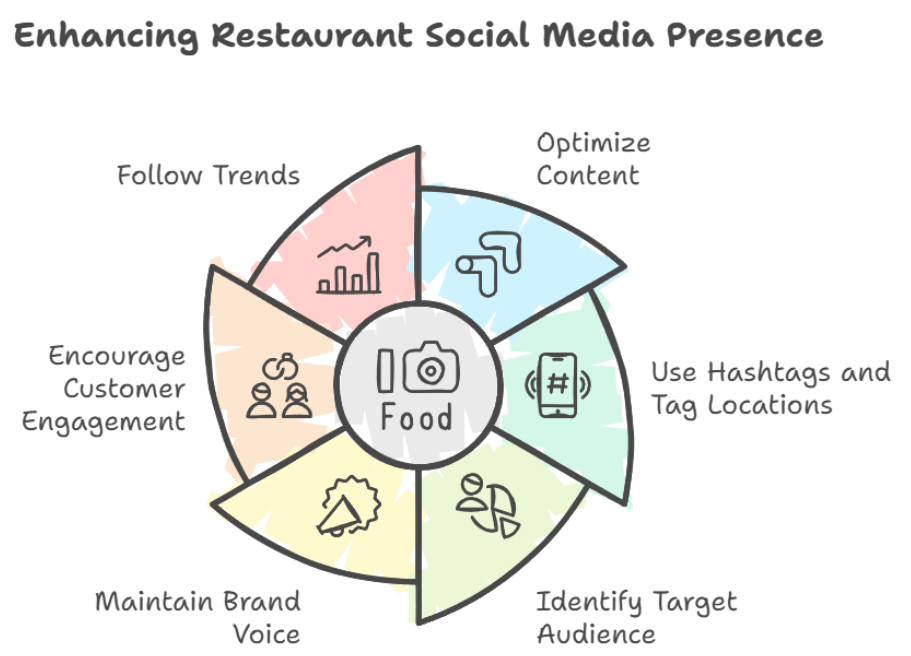
- Optimize Social Media Content: You should mention all the relevant details of your restaurant such as the address, email ID, and contact number, over your social media page to ensure SMM optimization.
- Hashtags and Tagging Location: You can use location tags when replying to the comments to be noticed by the potential customers of a particular area. Similarly, a new eatery can always use relevant hashtags in each of its posts to expand its reach.
- Identify Your Target Audience: Also, you have to be clear about your target audience. It will help you approach the customers of desired age group, gender, location, etc. for framing strong social media strategies.
- Behind The Scenes: The people are often interested in peeping into your restaurant’s kitchen and knowing about your preps. You, as the business owner can take this opportunity to build a strong personal bond with your audience by showcasing your commitment to food quality and service.
- Create and Maintain Brand Voice: The way a message is conveyed by a brand helps it establish a unique brand voice, style, and tone. Thus, you should identify, develop, and maintain your restaurant’s brand voice that aligns with your mission, goals, and personality.
- Encourage Customers to Tag You: You should provide additional discounts and freebies on the next visit if the guest tags your restaurant on their post regarding their recent visit.
- Follow the Trend: Also, you should take advantage of the current trend to create viral posts that may create a buzz among social media users.
Innovative Social Media Strategies for Restaurants
Restaurants that don’t let their guests and potential diners forget them can expect greater customer loyalty and reach. Nowadays, brands either hire social media managers or digital marketing companies to manage their visibility on different social media platforms. This is because, they know that social media campaigns on Instagram, Facebook, TikTok, YouTube, X (formerly Twitter), and Pinterest can influence customer demand and behavior.
Whether it’s a fine-dine restaurant or a small cafe, everyone is promoting their menus, offers, ad campaigns, customer testimonials, events, and other engagements online. But, for the success of any social media campaign, it is equally essential to strategically frame the content, videos, images, and messages that will reach the target audience.
Today, we will walk you through 5 most innovative social media strategies to follow in 2024 that will help you grow your online presence if you run a food business:
Engaging on Multiple Platforms
With the growing number of users on different social media platforms, it’s important for restaurants to engage almost on all these platforms. It will enable them to tap the vast and diverse target audience. Also, large restaurant chains should have an integrated platform for social media management. It will help the eateries to:
- Maintain their social media content calendar,
- Save time on ad publishing,
- Track analytics across all platforms, and
- Perform other social media engagement activities.
For example, Burger King interacts with its target audience on almost every social media platform like Instagram, YouTube, TikTok, Facebook, X (formerly Twitter), and LinkedIn.
Visual Content
The restaurants should regularly post reels and images of their special dishes or the most recent event. Find out How To Leverage Instagram Reels To Explode Business Growth? Moreover, these high-definition images and videos should be shot by a professional photographer. It increases their impact on the target audience. Also, these visuals should be supported by a catchy title and engaging description to grab and retain the viewer’s attention.
For instance, an Instagram post with an image of a tempting Hawaiian pizza couldn’t let you scroll any further without having a look at it.
Social Media Contest
Another way to engage with the users online is to run a contest and invite more and more people to participate in it over social channels like Facebook, Instagram, and YouTube. The brands can ask people to follow their social media accounts; and save, like, or share posts while tagging people in these shared posts to increase engagement. Also, they can keep exciting prizes like free dine-in, lucky draws, and discount offers as the winning opportunity for participants.
For example, an American restaurant in Canada shared a picture of its new sandwich with a brief on its key ingredients. Then it asked the audience on Instagram and Facebook to suggest a name for that dish. The name of the winning person will be mentioned in the restaurant feed. This social media strategy not only publicized the sandwich but also encouraged public participation in restaurant’s decision-making.
In another example, a restaurant motivates its guests to take a picture of their food and share it on their social media accounts while tagging the restaurant. The picture with the maximum likes would be rewarded with a special prize.
Collaboration
The restaurants today are collaborating with the other businesses especially the other popular brands or the social media influencers. Growing with the community is always a great idea when your audience demands a unique and innovative approach.
On October 8, 2024, Wendy’s delighted its fans by collaborating with Paramount on the occasion of the 25th anniversary of SpongeBob SquarePants. It launched the new SpongeBob-themed Krabby Patty Kollab meal serving a Pineapple Under the Sea Frosty and a Patty Kollab Burger. The audience went crazy over social media on this launch. Read the full story here – SpongeBob SquarePants to make krabby patty with Wendy’s; here’s why it’s so special; are there any discounts?
Inviting Food Bloggers and Critics
Food critics and bloggers have a strong influence over the audience, especially when it comes to the food business. If you want to target the local audience, it’s better to partner with the most famous food blogger in your town to extend your reach. Also, you can associate with popular Instagram photographers to click and feature your food on their pages. This way you can promote your restaurant among their followers.
For instance, the Sweet7 in Vancouver known for its fruit tea and fresh mango drinks was featured in the reel of the famous Canadian food blogger Howard Yu’s Instagram page food_with_howie. He tried their iconic super grape drinks and found them refreshing. He relished the taste of fresh grapes in every sip with jelly textures adding a fun experience.
Final Thoughts
Whether McDonald’s or KFC, every brand strives social media presence. Although some big restaurant chains target a global audience, local food businesses seek the attention of local diners. They can connect with audiences of all age groups and generations to break geographical barriers. Social media strategies and engagement for restaurants is an impeccable mode of communication and community building for local and global food businesses.
Frequently Asked Questions
How often do restaurants need to post on social media?
The food businesses need to post something or the other on social media, every day. It can be anything from a new menu inclusion to employee spotlights. A consistent approach towards social media marketing can help these eateries generate more traffic and engage more users online.
How do restaurants work with social media influencers?
A new restaurant in the city can often collaborate with the social media influencers in the area. These influencers have a good number of followers and can publicize the restaurants, their food, and their services.
However, the food businesses have to select an influencer who is famous in the city. Also, they have to be assured that the influencer will use the same brand voice as theirs. Moreover, the eateries should make sure that the influencers post their genuine opinion for more transparency.
How much does SMM cost to restaurants?
If you run a restaurant in Canada, then hiring an in-house social media manager can cost you around $4,000 to $7,000 per month. The monthly retainer fees of a social media marketing agency can be somewhere between $1,500 to $10,000.
On-boarding an in-house social media manager or taking the services of an SMM agency depends upon different factors. Some of these are your business size, finances, strategies, and goals. Also, learn How to Find the Best Social Media Manager in Metro Vancouver?
What social media platform is best for food marketing?
Instagram, Facebook, and TikTok serve as the top platforms for restaurants to create their social media presence. However, nowadays, Pinterest has become one of the favorite places for users to find innovative recipes and food secrets. Therefore, it has gained immense popularity among food businesses to strengthen their bond with their target groups.